1) Discuss the various images drawn by Shakespeare in Sonnet 73. [WBCHSE Model Question]
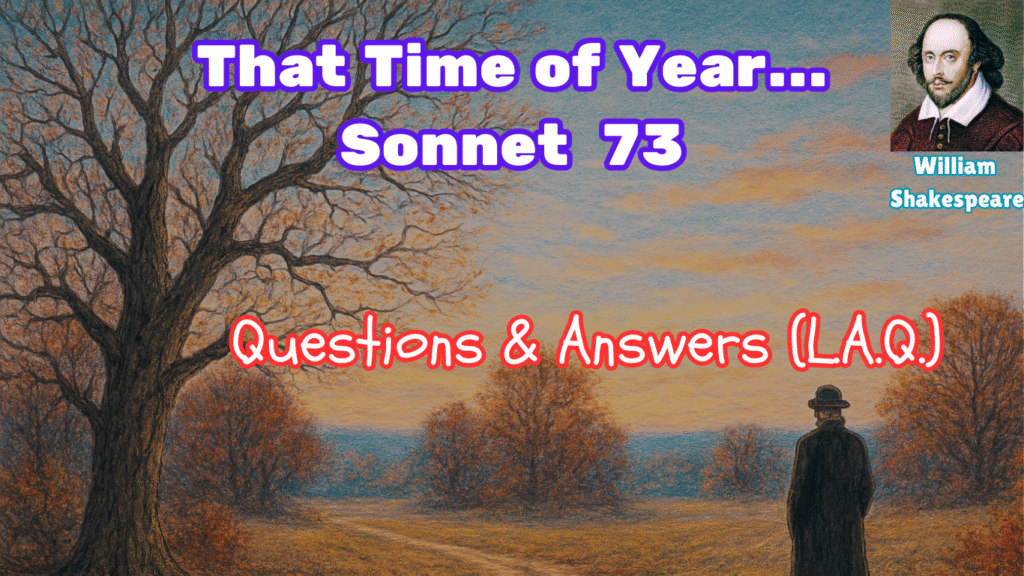
Ans. In Sonnet 73, William Shakespeare depicted three vivid images in the three quatrains to describe the theme of ageing and death. The first image he uses is late autumn when the trees have shed their leaves and ‘yellow leaves, or none, or few remain’. He uses another image, ‘Bare ruin’d choirs’, to compare with the empty branches of the tree. The poet uses the second image of Twilight of a day. The phrase ‘after the sunset fadeth in the west’ symbolises the end of life, and life is slipping away. ‘Death’s second self’ is referred to sleep or similar to death. The third image is a ‘dying fire’ that burns dimly on the ashes. The fire consumed with that which it was nourished by means life itself brings about its destruction. Through these images, the poet excellently expresses the decline from youth to old age and ultimate death.
2) ‘In me thou see’st the Twilight of Such day as after sunset fadet in the west’ – How does the poet use the image of sunset to convey the theme of ageing? Explain how this imagery connects to the overall image of the Sonnet (3+3)
Ans. William Shakespeare uses the image of sunset to convey that life is slipping away. He reaches the final stage of his life. The line ‘the twilight of such day after sunset fadeth in the West’ represents the transition from youthful brightness to ultimate death. As after the twilight, the darkness approaches, life’s energy and youthful beauty come to an end in the inevitable death.
The sunset image connects to the other images in the Sonnet, that is, late autumn and a dying fire. Autumn leads to winter, Twilight leads to night, and the glowing fire leads to ashes. So, we clearly find a unified picture of the three images, and they together suggest approaching death, decay, degeneration and ultimate death.
3) ‘That time of year thou mayst in me behold
When yellow leaves or none, or few do hang.’ – Why does the poet mention yellow leaves or none or few? How does this image reflect the poet’s feelings about ageing and life?
Ans. The poet mentions ‘yellow leaves or none or few’ to reflect his feelings of ageing, declining energy and nearness to death. The yellow leaves stand for the last trace of energy that remains in the poet. ‘none or few’ indicates that the strength and vitality of the poet have disappeared.
The image of a bare tree reflects the poet’s deep awareness of ageing and decay. It also expresses a sense of loss that the poet once had. He remembers the time when his life was full of ‘sweet bird’ symbolising youth, joy and activeness. Thus, the bare branches and falling leaves show that his life is moving toward the end.
4) How does the concluding couplet of Sonnet 73 highlight the power of love in the face of ageing and mortality?
Ans. The concluding couplet highlights the power of true love when confronted with ageing and inevitable death. The poet tells his beloved that approaching death makes the beloved’s love stronger, deeper and more sincere. When the beloved would realise that he would live for a limited period, he would value the poet more and love him with greater intensity. Thus, the couplet celebrates the power of love that overcomes fear and defies time in the face of ageing and mortality.
You may also read:
That Time of Year… Sonnet 73 – Questions and Answers (S.A.Q.)
That Time of Year… Sonnet 7 – Summary with Bengali Meaning